






As the trend for eco-efficient technology sweeps across the United States and Western Europe, a number of developers are addressing the issue of sustainability on the Polish market. The phenomenon has been slow to catch on, but recent activity in the real-estate market from developers like Orco, TUP, Torino Development and Eko-Park has signaled a definitive shift towards sustainable solutions in the property sector.
"Over the last few years, the corporate approach towards technology has changed significantly and while the level of eco-consciousness is still lower than in the West, it has certainly grown stronger," remarks Katarzyna Karbowniczek, a specialist at the World Wildlife Federation (WWF) in Poland.
Modern technologies
According Krzysztof Niewiadomski, an analyst at real-estate consultancy Reas, the strength of demand on the market has sent developers scrambling to satisfy consumer appetite, often neglecting issues of ecology and energy-efficiency in the process. However, Niewiadomski sees a number of new projects that signal a shift in mindset and practice, particularly in the single-family-home and luxury segments.

"These segments are often prepared to pay a premium for a product that is socially and environmentally responsible," explains Niewiadomski. "The market forecast anticipates a spillover of this trend onto the mid-range market, as ecology becomes more popular and people are willing to pay more in order to support sustainable solutions."
Extra costs in the construction phase can often translate into savings further down the line in terms of energy consumption, asserts Christian Schnell, a partner at legal-and-tax advisory Brockhuis Schnell Jurczak Prusak (BSJP). "Buyers understand that higher property prices are directly reflected in savings on energy bills. This should theoretically enhance competition between developers, positively impacting the quality of construction projects, including their environmental sustainability," he says.
Solutions for reducing the environmental impact of the construction sector can be implemented across the design and operational phases, according to Reas' Niewiadomski. "Firstly, materials incorporated in the construction must be eco-friendly - easily adapted to the surrounding environment and easily broken-down or recycled after having completed their life cycle. One prime example of such technology is steel-based construction. With regard to operation and management, solutions for reducing energy usage include recycling heat, implementing wind and solar energy solutions, along with capping usage to cut down on pollutants," says Niewiadomski.
Capital ideas
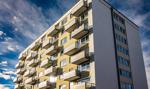
The Living Steel project - a global program for sustainable housing solutions - is a prime example of this type of construction. In the Polish capital, Living Steel and the TUP investment group will create an entirely innovative construction in steel - a fully recyclable three-storey residential building outfitted with high-quality insulation and an energy-efficient heating system. The development is intended for middle-income families - bringing home the point that sustainability is not just an environmental issue but a social one as well.
Developer Eko-Park is also working on sustainable solutions - in that it banks on the ecological connotation inherent in its name, commanding prime figures per sqm for its residential and office development in the Mokotów district of Warsaw. "The master plan for all 13 phases of the development calls for a property that harmonizes with the green areas of the surrounding Pole Mokotowskie park and provides efficient energy solutions. All aspects of the construction - from the building materials to outfitting and building management - are of the highest quality and as ecologically sound as possible on today's market," says Michał Morawiecki, general manager for the Harmony Office Center, a part of Eko-Park's development.
Projects in the provinces
Orco, for its part, is starting to look beyond the capital, to undeveloped rural areas where the real challenge lies for sustainable development projects - it has plans to build a sustainable community outside of Szczecin for over 700 families by 2009.
Torino Development, meanwhile, is working on a residential enclave in the Mazury Lakes district of Poland. Situated along the port between the Jegliński Canal and Lake Ro�, the 12-ha Wrota Mazur (Mazury Gates) development will maintain the natural landscape of the surrounding woods and waterways. According to Robert Głowacki of the Archada studio, which created the project, "The complex will provide a home for over 500 nature-lovers while ensuring that there are no negative effects on the local environment."
Bright future?
The WWF's Karbowniczek agrees that Poland is a strong prospect for eco-initatives, "particularly with the impending implementation of environmental legislation," she says. BSJP's Schnell remarks that there are relatively few overall government initiatives for sustainability at present, "however some steps are being taken, including a bill on the renovation and thermo-modernization of existing buildings and a separate bill for new buildings. Both of these aim to cap energy consumption in line with standards dictated by the EU Energy Performance of Buildings Directive, which is to be implemented into the Polish legal system over the next few years."
Poland's nacent reputation as an eco-friendly country may be on the increase, but it still has a long way to go. Douglas Noble, Orco's director in Warsaw, sees hope in developers' efforts to go green. "It remains to be seen whether sustainable development will indeed transform the Polish landscape and define new standards for the industry. However, the drive for innovation on the part of developers can make the real-estate industry become the leading sector for sustainability for the Polish economy," he says.