









Last week the European Commission put forward a proposal to open EU postal markets fully to competition by 2009, in line with a target date set out in the current Postal Directive.
„In preparing the proposal, we have put consumer and user needs first. With full market opening in 2009, we can look forward to more innovation, better services and improved efficiency. Without it, EU postal markets will be increasingly unable to meet the challenges of the communications revolution,” said Internal Market and Services Commissioner, Charlie McCreevy.
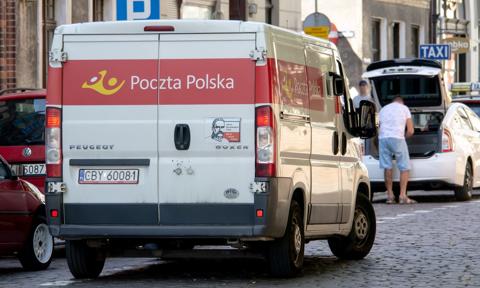
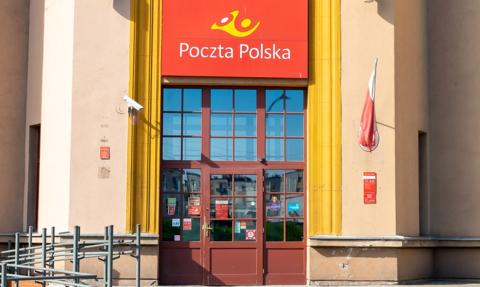
In two years‘ time, Poczta Polska, like other postal services giants throughout the EU, will thus lose the final ’reserved area‘ in which it enjoyed the monopoly - that of dispatching mail below 50 grams. While this is unlikely to ruffle those outside the industry, it should be remembered that Poczta Polska is one of the biggest companies in the country. Last year its revenues reached zł.6.5 billion with net profit at zł.101 million. It currently employs nearly 100,000 people and has a vast network of 8,400 offices which can be found even in the most remote parts of Poland.
Due delivery
The liberalization of the postal market has been proceeding gradually over many years and the new regulations do not come as a surprise to anyone. There are already some 110 companies on the market competing with the state giant, mainly in the field of package delivery, but Poczta Polska is getting ready for the entrance of even more players.
„We are trying to prepare for the full liberalization of the market. The first step was to change the organization‘s structure last year into a purely business one - specific services are supervised by business centers. We‘re now fixing the processes and will make them function properly,” says Radosław Kazimierski, a spokesman for Poczta Polska.
„The second step is diversification. We already offer banking services and are currently introducing professional banking-services counters. We sell insurance and, besides, there is an unofficial, basic, draft agreement for future cooperation with PZU,” he adds.
The network of Poczta Polska‘s offices is any banker‘s dream. Not so long ago, the current government proposed merging three state-controlled giants, Poczta Polska, PKO BP and PZU, into one body, generating great profits for the state budget. The concept didn‘t get off the drawing board, but the idea of combining banking, postal and insurance services is present in Poczta Polska‘s strategy.
Package of reforms
After the full liberalization of the postal market, postal giants from other countries, such as Deutsche Post, the French Le Poste or their Dutch counterpart, TNT, will be able to freely offer their services to Poles. Independent operators have already taken a big chunk out of the package-delivery market, a sector worth a total of zł.800 million a year.
„The biggest providers of postal services, such as Deutsche Post or TNT, are already present on the Polish market mainly as the shareholders of express-carrier companies. It‘s hard to say whether they will be interested in offering the full range of services. For that you need a vast distribution network,” Kazimierski told WBJ.
Access to customers‘ mailboxes is also crucial, something which has been the private domain of Poczta Polska‘s army of postmen. According to the new regulations, mailboxes must be accessible to other providers by August 24, 2008.
David vs Goliath
But while international companies are waiting for full liberalization, Polish businessman Tomasz Bodach has already managed to find a loophole in the regulations. He established the first independent post in Rybnik and delivers letters in all weight categories, including those below 50 grams protected by regulations.
„We use safety seals just like the ones that are usually put on parcels at the post office. There are no regulations as to what they should be made of so the ones our customers put on letters are iron. The Office of Electronic Communication (UKE) has examined the matter thoroughly and found no breach of law,” Bodach told WBJ. These iron seals will push the weight of a parcel or envelope beyond 50 grams, and outside of the monopolistic fiefdom of Poczta Polska.
Bodach charges zł.1 per mail, which is up to 350 percent less than Poczta Polska. Normally, he would be entitled to send mail below 50 grams provided he charged three-and-a-half times more than the monopolist.
For the time being, Bodach‘s post sends mail just within the city borders, but the network is expanding and similar institutions are springing up in other big cities.
„It is first of all an offer for businesses as not many individuals send letters just within the city borders. Our customers include cooperatives, legal offices, and internet providers who regularly send thousands of letters, and our prices are much lower than Poczta Polska‘s,” says Tomasz Podolski, director of Kraków‘s Municipal Post, a branch of Bodach‘s company.
One-horse races
Poczta Polska is not the only giant accused of monopolizing the market. Last year the Office of Competition and Consumer Protection (UOKiK) launched 350 proceedings against practices limiting free competition. The companies most often accused of monopolistic behavior are the usual suspects, typically former or current state giants whose dominant position was created in the communist era, with Telekomunikacja Polska (TP) topping the list, followed by PKN Orlen, Polskie Sieci Energetyczne and PKP.
„In Poland having the dominant position on the market is not banned. It‘s just the excessive use of this position that‘s forbidden. Very often, even if the market has been opened for competition, the monopolists have a great advantage because they control the infrastructure. For instance, this is the case with TP,” says Małgorzata Cieloch, head of UOKiK‘s press office.
The fines imposed on Poland‘s biggest telecom by UKE are usually related to the company‘s cooperation with other telecommunication services providers and limiting access to the telecommunication network or breaching consumers‘ rights. But although the regulator has imposed seven fines on TP since 2002 with a total value of more than zł.115 million, not a single grosz has so far been paid into the Polish budget.
„When TP was privatized, it stopped paying the fines. It appeals against all the regulator‘s decisions. So far, the court has confirmed two of the fines and the enforcement procedures are being carried out,” says Jacek Strzałkowski, UKE‘s spokesman.
The highest fine of zł.100 million was imposed on TP for forcing its broadband internet-access customers to sign up for a telephone subscription. A fresh round of fines are also in the pipeline.
Positions of power
Katarzyna Kosakowska, director of PKPP Lewiatan‘s legal department, points to yet another field where a state-controlled giant has a significant competitive advantage. Since September 20 this year, when an amendment of the Energy Law entered into force, all gas providers importing gas from abroad have had to store three percent of the total amount of gas to be imported annually on the territory of Poland.
„The problem is not only that storing gas is extremely costly but also that currently all storage warehouses in Poland belong to PGNiG, which doesn‘t make them available to other entities. At the same time, there‘s no independent company operating in Poland which would be able to construct such warehouses within the next year or two,” Kosakowska says.
Another sector still dominated by one company is railway transport in Poland, and while other countries have run into trouble when privatizing the railway networks, PKP has for many years been struggling to diminish its losses and some believe freeing up the market might be a good idea.
„Private railways are possible starting from tomorrow. Even if you look at the current structure of the group, there has been a kind of split within PKP itself and the most profitable parts of the group compete with each other. If anything could remain in the state‘s hands, it‘s the rails. Anything that moves on them should be in private hands,” Andrzej Sadowski, founder and vice president of the Adam Smith Center, told WBJ.
Monopolies or the privileged positions of certain companies on the market are generally sustained by state authorities, who often rely on public safety as the strongest argument to keep the industry giants out of the private sector. But according to Sadowski, there are no economic grounds for the existence of monopolies in any sector.
„The only reasons for the existence of monopolies are political. The argument that something should be kept in the state‘s hands for the sake of security is absurd. Following this logic, we would have to send farmers back to kolkhozes because only that way the nation will be fed,” he adds.
The European Commission has cracked open the postal market, which could be the first step in dismantling barriers to sectors traditionally controlled by state giants. Poczta Polska faces a tough time as it will have to transform itself to cope with competition from foreign and domestic firms, and the Polish antitrust regulator is also taking a harder line in other sectors.
Źródło: